Income Funds: A Complete Australian Investor's Guide
Learn how income funds work, explore different fund types, and understand the distributions, risks and strategies for generating regular investment income in Australia.
What is an Income Fund?
An income fund is a managed investment designed to generate consistent income by investing in a range of income-producing assets. Here’s what sets them apart:
- Invests in a diversified mix of assets, including floating-rate loans, credit securities, mortgage portfolios, hybrid securities, high-dividend equities and alternative income sources – not just government or corporate bonds.
- Investors hold units in the fund, with professional managers actively adjusting the portfolio in response to market conditions.
- Distributions are typically paid monthly, quarterly, or semi-annually, making these funds suitable for those seeking regular cash flow and potentially higher yields than traditional fixed income funds.
- Returns can fluctuate and generally involve higher risk, as the distributions depend on asset performance, dividend changes, and interest rate movements.
- Fund managers may adjust the portfolio, increasing exposure to floating-rate or credit assets as market conditions change – for example, when interest rates rise or credit spreads widen.
- Unlike fixed income funds that provide predictable bond coupon payments, income funds offer variable returns.
- In Australia, many income funds are available only to wholesale investors (those with at least $2.5 million in net assets or $250,000 annual income) due to the complexity of the strategies involved.
These funds are best suited to investors comfortable with fluctuations in income and willing to accept higher levels of credit, equity and liquidity risk in exchange for the potential for greater returns.
As MoneySmart notes:
Investors in such funds buy units in a pooled portfolio and that ‘you could lose some or all of the money you invest.’
How Do Income Funds Work?
The Income Fund Structure
In Australia, many income funds are structured as unit trusts and registered as managed investment schemes under the ASIC framework. Licensed fund managers are the responsible entities which operate these schemes, handling the asset selection, portfolio management and distributions on behalf of investors.
Investors purchase units in the fund, with unit prices typically calculated daily or monthly based on the fund’s net asset value (NAV) (assets minus liabilities divided by units on issue). In turn, each fund’s pooled capital is invested according to its stated investment strategy as set out in its Product Disclosure Statement (PDS) and scheme constitution.
How Income is Generated & Distributed
Income funds derive their income returns from their underlying assets. Their main income sources are: interest payments from debt, dividends from equities, and rental/loan income from specialist credit or mortgage pools.
Unlike fixed coupon payments from pure bond portfolios, distributions fluctuate, and depend on asset-performance and interest rates.
Each manager typically distributes most or all of the net income (after fees and expenses) to investors. Distribution frequency varies. Some funds pay monthly (popular for cash-flow), while others pay quarterly, semi-annually or annually.
Many also offer a Distribution Reinvestment Plan (DRP) so investors can automatically reinvest payments into new units.
Unit Pricing & Liquidity
Income fund unit price movements reflect changes in their underlying asset values and any distributions paid.
According to Moneysmart, most income funds in Australia are unlisted (not exchange-traded) which means investors apply directly via the responsible entity rather than buy/sell on a stock market.
Liquidity terms vary. Some funds permit daily redemptions, while others offer monthly or quarterly liquidity, while according to Money Mag, wholesale-only funds often impose longer notice periods or redemption restrictions, especially when exposed to potentially less liquid assets.
Types of Income Funds Available in Australia
Income funds in Australia invest across various asset classes beyond traditional bonds. Understanding the different types helps investors select funds aligned with their income goals and risk tolerance.
Credit & Floating-Rate Funds
Credit and floating-rate funds invest in floating-rate loans and corporate credit, with interest adjusting as market rates (e.g. linked to the BBSW or RBA cash rate). They provide protection against rising interest rates as yields increase and can offer higher yields than traditional bond funds but with higher credit risk.
Many are wholesale-only, and management fees tend to be around 0.60-1.50% p.a.
For example, Betashares Australian Bank Senior Floating Rate Bond ETF invests in senior floating-rate bonds issued by Australian banks. If interest rates increase, so too does the income investors receive.
Mortgage & Secured Lending Funds
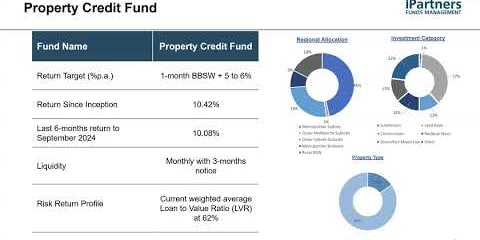
Mortgage & Secured-Lending Funds provide loans secured by residential or commercial property, charging interest (often floating) and potentially offering higher yields than government or corporate bonds, though with higher credit-risk, property-valuation risk and liquidity constraints. Many are restricted to wholesale investors.
Fees are typically 0.50-1.50% p.a.
For example, CPF Property Debt Fund invests in loans secured by real property in metropolitan Sydney/Brisbane/Melbourne.
Diversified Credit & Multi-Asset Income Funds
Diversified Credit & Multi-Asset Income Funds diversify across income-producing assets such as credit, hybrids, floating debt and equities. Fund managers actively allocate based on market conditions and relative value, aiming to provide more consistent income through diversification. They are differentiated by their broad asset mandate versus bond-only funds. Risk/return profiles vary widely. They may include both fixed and floating assets for rate-cycle flexibility.
Fees are typically 0.70-1.50% p.a.
For example, Prime Value Diversified High Income Fund is a diversified income with medium risk exposure across cash, fixed income, mortgages and other income assets.
Hybrid Securities Funds
Hybrid Securities Funds invest in hybrid securities issued by banks and corporations (with both debt and equity features). They offer higher yields than senior bonds but rank lower in the capital structure. Their differentiator is their equity-like features with an income focus, as opposed to investing only in fixed-interest securities. Income may be franked or partially franked. Distributions can be suspended if the issuer faces financial stress.
Fees are typically 0.50-1.00% p.a.
For example, PURE Income and Growth Fund is an actively managed credit fund that includes debt and hybrid securities with mostly floating-rate structure.
Equity Income & High Dividend Funds
Equity Income & High Dividend Funds focus on the shares of companies paying high dividends as they provide income from dividends rather than interest/coupons. They are differentiated by their equity exposure rather than pure fixed-interest exposure. These funds may include franking credits (and the associated tax benefit). They also tend to exhibit higher volatility than credit-income funds, while their distributions depend on dividend policies and economic conditions. They may provide inflation protection if companies raise their dividends over time.
Fees are typically 0.60-1.20% p.a.
For example, Prime Value Equity Income Fund focuses on Australian equities paying high dividends, aiming for regular tax-effective income.
Cash-Plus & Enhanced Cash Funds
Cash-Plus & Enhanced-Cash Funds invest in short-term floating-rate securities, bank deposits and money-market instruments. They are differentiated by active short-term-instrument management versus traditional bond portfolios. They aim to deliver returns above cash/term deposits with minimal capital-volatility, have very low duration (interest-rate sensitivity) due to their short-term holdings, high liquidity (daily or weekly redemptions), and lower yields than other income fund types. However, they provide stability and liquidity.
Fees are typically 0.20-0.60% p.a.
For example, Trilogy Enhanced Income Fund invests in cash, term deposits, bills, and fixed/floating debt securities. The fund targets a return of the RBA cash rate + 1.5% p.a.
Key Benefits of Income Funds for Investors
There are a number of benefits of income funds investors should be aware of.
Regular Income Distributions
Income funds typically pay scheduled distributions (monthly, quarterly or semi-annually), enabling more predictable cash flows than relying solely on capital draw-downs. This feature is especially valuable for retirees in the pension phase or pre-retirees who need to align their investment cash-flow with their living-expenses. Distribution regularity allows for better planning and budgeting of recurring expenses, and well-structured funds can meet regular outgoings without forcing investors to sell capital.
Professional Management
When you invest via an income fund, you delegate security-selection, credit assessment, portfolio monitoring and active rebalancing to experienced fund managers.
As the Financial Services Council (FSC) emphasises, professional funds management ‘offers access to a wider range of asset classes and continual management of your portfolio’ which an individual may struggle to replicate.
MoneySmart also notes that using a managed fund means ‘paying a professional to make the investment decisions for you.’
Especially in complex asset classes like private credit or bond-selection, investing via a fund removes the burden of individual security-analysis and gives access to institutional-grade investments not typically available to retail investors.
Diversification
Income funds aggregate investor funds and deploy them across multiple securities, issuers, sectors and often geographies, thereby reducing the concentration risk that comes with holding a small number of high-yield shares or bonds.
As MoneySmart emphasises: managed funds enable investors to ‘spread your money across different fund managers and funds that invest in different asset classes’ thereby lowering idiosyncratic risk.
For investors with smaller amounts of capital, this diversification benefit is difficult to replicate via direct investments alone, yet remains critical for managing risk while seeking income.
Access to Institutional Investments
Many income-producing securities, such as wholesale corporate bonds, private credit, mortgage pools or infrastructure debt, require large minimum investments or are only offered to wholesale investors. An income fund structure allows retail investors access to these asset classes, and leverages the negotiation power of the fund manager.
As FSC highlights: access to ‘a wider range of asset classes that individuals may find difficult to access themselves.’ This is a meaningful advantage for income-seeking portfolios that aim beyond standard listed high-yield shares.
Flexible Investment Amounts
Many retail income funds have relatively modest minimums (e.g. $1,000–$25,000) and allow additional contributions over time, periodic investing and optional reinvestment of distributions via DRPs (Distribution Reinvestment Plans). This enables continuous scaling of investment without complex re-structuring. Moreover, DRP features mean that distribution income can compound inside a fund without requiring additional cash-flow from the investor.
Tax Efficiency (for Certain Fund Types)
Income funds investing in Australian shares may generate fully-franked dividends, which provide franking credits that are especially valuable for low-tax investors or those in the pension phase.
Also, managed funds pass through income, dividends and capital-gains to investors, enabling tailored tax treatment.
For superannuation accounts (which may receive tax-exempt income in pension phase), income fund distributions can align well with tax-efficient structuring.
Risks & Considerations When Investing in Income Funds
While income funds offer many benefits, investors must understand the risks involved.
Distribution Variability Risk
Income fund distributions are not guaranteed and can fluctuate materially, unlike fixed-coupon bond funds. Returns depend on underlying asset performance, interest-rate dynamics and credit conditions.
For example, mortgage or credit funds are exposed to borrower performance and property-market downturns, while equity income depends on corporate dividend policies and economic cycles.
Asset Diversity Risk
Income funds often span multiple asset types such as credit, mortgages, hybrids, equities, meaning their risk profile is more complex than for pure fixed-income bond funds. Each asset class performs differently under various economic scenarios and interest-rate shifts.
For example, a property market downturn may impair mortgage-backed assets, credit weakness may hit corporate bond holdings, while economic weakness may impact dividend payments.
Income fund investors must understand multiple underlying risks, not just interest-rate and credit risk. As MoneySmart emphasises: ‘successful investors understand the main types of investment risk that can hit their investments and how to manage it through diversification.’
Interest Rate Sensitivity
Unlike bond funds which offer fixed coupons, income funds are sensitive to interest rates movements.
ASIC’s guidance reminds investors that fund performance is tied to the value of underlying assets, which fluctuate. Understanding rate sensitivity requires clarity on a fund’s asset mix and how the manager is positioned for upcoming rate shifts.
For example, a floating-rate credit fund may benefit from rising rates via higher distributions while its unit values remain relatively stable. Conversely, funds invested in fixed-rate loans or bonds will suffer from capital-value erosion when rates rise.
Credit Risk
Credit risk arises when borrowers or issuers fail to meet their payment obligations. Income funds targeting higher yields typically assume higher credit risk, whether it be via corporate bonds, private credit or mortgage-backed assets. In mortgage/credit funds, borrower creditworthiness and property collateral values matter, while in corporate bond funds, issuer financial deterioration can impair payments and valuations.
Thus, credit risk should be a central consideration when assessing an income fund’s strategy, lending standards and portfolio credit quality.
Liquidity Risk
Some income funds invest in illiquid underlying assets such as private credit, mortgages, and property-backed loans, and may impose limited redemption windows (e.g. monthly or quarterly) or require notice periods (often 30-90 days).
As ASIC points out, pooled mortgage schemes face significant challenges in satisfying withdrawal requests when their underlying loans are long-dated and the market is stressed. Redemption suspensions may occur in these circumstances.
Retail investors should check Product Disclosure Statements (PDS) for liquidity terms and align their fund choices with their investment objectives.
Wholesale Investor Restrictions
Higher-yielding income funds, especially those accessing private credit or institutional bond markets, are often available only to wholesale investors (e.g., net assets ≥ A$2.5 million or gross income ≥ A$250 000 in the past two years). Retail investors are excluded regardless of their investment sophistication.
A recent ASIC submission noted that many wholesale schemes lack the transparency of retail schemes.
Fee Impact on Returns
Fees in income funds, especially actively managed ones, can range from ~0.20%-1.50% p.a., plus performance fees in some cases. These fees directly reduce a fund’s net distributions to investors and over time compound significantly.
Investors in income funds should assess the total cost of ownership (management fees, performance fees, entry/exit fees) relative to the fund’s yield and expected return.
Tax Complexity
Income fund distributions may comprise a mix of interest, dividends (possibly franked), capital gains, and foreign income. The tax treatment of each component varies by investor circumstances.
For example, fully-franked dividends may carry franking credits which are valuable for low-tax investors.
The MoneySmart investor toolkit emphasises the need to understand the tax implications of investment structures prior to investment. As always, seek professional advice when necessary.
How to Invest in Income Funds in Australia
Direct Investment with Fund Manager
Investors may subscribe directly to an income fund via the fund manager’s application process by completing the application form as set out in the Product Disclosure Statement (PDS), providing identification for AML/CTF compliance, and making your initial investment by deposit or cheque.
Ongoing contributions are typically set up via BPAY or direct deposit. Once you’re invested, you’ll also gain access to a fund’s investor portal for statements and performance tracking.
Through Investment Platforms
Many income funds are accessible via investment platforms (also called ‘wraps’) such as HUB24, Netwealth or BT Panorama. These platforms consolidate multiple holdings into a single account, simplifying administration, reporting and tax-year statements.
A key benefit is streamlined reporting and easier rebalancing across funds. However, platform fees apply in addition to fund management fees. The total cost of wraps ranges between 0.50-0.60% p.a. for most users.
So for investors holding diversified fund portfolios, platforms offer operational convenience at a cost.
Within Superannuation
Investing in income funds within superannuation is possible through industry or retail super funds’ investment menus.
In a member-choice super arrangement, you may select one or more income-fund options. This is especially relevant for investors in the pension phase when regular income streams are needed and tax benefits apply.
The concessional tax environment of superannuation adds efficiency, although you are constrained to the fund options offered by your superannuation provider.
Self-Managed Super Funds (SMSFs)
An SMSF structure enables trustees to invest directly in most income funds, making this a compelling route for SMSFs in the pension phase seeking tax-free income streams. You must ensure the fund aligns with your SMSF’s documented investment strategy and complies with its diversification and liquidity requirements.
Because SMSF trustees bear investment, compliance and administrative duties, this pathway suits individuals confident in managing a fund, or supported by appropriate advice.
Through Financial Advisers
A qualified financial adviser can recommend suitable income funds tailored to your objectives, conduct due-diligence on fund managers, and assist with asset allocation, selection and monitoring.
Advisers may also provide access to institutional fund-classes (often with lower fees or higher minimums) not readily available to retail investors. This advisory route is valuable for investors seeking specialist oversight, though it adds an adviser-cost layer and requires strong alignment between investor objectives, adviser competency and fund strategy.
Steps to Start Investing in Income Funds:
- Define income objectives: Clarify income needs, timeframe, and cash flow requirements.
- Assess risk tolerance: Understand capacity and willingness to accept capital fluctuations.
- Research fund options: Compare fund types, strategies, fees, and historical distributions.
- Review Product Disclosure Statements: Understand investment strategy, risks, fees, and liquidity terms.
- Check responsible entity: Verify fund manager experience and regulatory compliance.
- Consider tax implications: Understand how distributions will be taxed in your circumstances.
- Complete application: Submit application with required identification documents.
- Make initial investment: Transfer funds according to application instructions.
- Set up distribution instructions: Choose cash or reinvestment options.
- Monitor performance: Review regular statements and adjust holdings as needed.
How to Compare Income Funds
Selecting the right income fund requires evaluating multiple factors beyond just distribution yield.
Distribution Yield & Consistency
Compare historical distribution yields but recognise that past performance is no guarantee of future results.
Review whether a fund’s yield has been maintained or cut over the cycle, understand whether it’s sustainable, and beware of unusually high yields which may signal elevated risk.
According to Moneysmart: ‘Look at long-term returns. A fund’s performance over 5 to 10 years gives you a better indication of how it will perform in the future.’
Fund Strategy & Asset Allocation
According to Moneysmart, income-funds require you to ‘understand how different investments work and how to manage them so you can choose the right ones to fit with your goals.’
Review what a fund invests in, its credit quality (for bond/credit funds), its sector/issuer diversification, its interest-rate sensitivity (duration), and ensure its strategy aligns with your income objectives and risk tolerance.
Fees & Costs
Small differences in fees can have a significant impact on your long-term returns.
Use tools such as Moneysmart’s Managed Funds Fee Calculator to see how annual costs erode returns.
Also, compare management expense ratios (commonly ~0.20–1.50 % p.a.), check for performance fees, entry/exit costs, and calculate the net yield after all fees.
Liquidity & Redemption Terms
Liquidity matters, so check how often you can redeem units (daily, monthly, quarterly), the notice period, any lock-up or suspension risk, especially in credit and mortgage funds where redemption might be restricted.
As Moneysmart warns: ‘You may not be able to withdraw your money until a certain point in time.’
In short, ensure a fund’s liquidity terms match your cash-flow and income-fund objectives.
Capital Stability
Beyond the distribution yield, evaluate how a fund’s unit price has fared, especially during periods of economic and market stress. This is an essential check for income funds aiming to preserve capital as well as deliver yield.
Fund Size & Manager Experience
Larger funds often benefit from scale and can be more stable, while very small funds may lack economies or face closure risk.
Also, examine a fund-manager’s long-term track record and the responsible entity’s resourcing. The experience and tenure of key portfolio managers are meaningful signals of capability.
Distribution Composition
Understand what makes up the distributions: interest, dividends, capital gains, and franking credits (for equity income), as well as their tax efficiency for your circumstances.
Regulatory Status
Confirm the fund is registered with ASIC, noting whether it is a retail or wholesale-investor fund, and whether it complies with regulatory benchmarks. These give you protections under the law and help avoid inappropriate exposure.
Income Funds vs Other Income Investments
Understanding how income funds compare to other income-generating investments helps inform portfolio decisions.
Income Funds vs Fixed Income Funds
👉 Key Distinction: Income funds trade predictability for flexibility and potentially higher yields through broader asset mandates.
Income Funds vs Term Deposits
👉 Key Distinction: Income funds offer higher potential returns through diversified, actively managed assets, while term deposits provide guaranteed capital security and fixed returns at the cost of flexibility and growth.
Income Funds vs Direct High-Dividend Shares
👉 Key Distinction: Income funds offer diversified, professionally managed income with lower volatility, while high-dividend shares provide direct ownership and franking benefits but with greater market risk.
Tax Considerations for Income Fund Investors
Understanding the tax treatment of income funds is crucial for after-tax return maximisation.
Distribution Components
Income funds may distribute interest, dividends (with franking credits), foreign income, capital gains or tax-deferred amounts. Each has a distinct tax treatment. Your annual AMMA or distribution statement will detail the components.
According to the ATO: ‘You must show any income or credits you receive from any trust investment product in your tax return.’
Interest Income
Interest from fixed income funds is taxed at your marginal tax rate, with ‘no special concessions or discounts’ according to the ATO.
Dividend Income & Franking Credits
When you hold Australian shares via an income fund, dividends often include franking credits. You must declare both the dividend and the franking credit. These franking credits can reduce your tax liability and may result in refunds if you’re in the pension phase or a lower-tax bracket.
Capital Gains
Funds may distribute capital gains when assets are sold.
According to the ATO: ‘If your only capital gains are from managed funds you will need to complete the Capital gains or losses section.’
Assets held longer than 12 months may qualify for the 50 % discount for individual taxpayers.
Foreign Income
International investing income is assessable.
According to the ATO: ‘Investment income may include foreign income. You must also declare interest from foreign sources and you can claim a foreign income tax offset for any tax paid on this income.’
The foreign income tax offset (FITO) may mitigate double taxation.
Tax-Deferred Distributions
Some funds include tax-deferred components (commonly property/trusts). These are not taxed when received but reduce your cost base, increasing future capital gains when you sell.
According to ANZ: ‘Tax-free and tax-deferred amounts are not included in an investor’s assessable income at the time of distribution.’
SMSF Considerations
In the pension phase for a Self-Managed Super Fund (SMSF), income and capital gains may be tax-exempt and franking credits fully refundable, making high-yield income funds more tax-efficient.
N.B. Detailed SMSF rules are beyond the scope of basic fund tax statements.
Record-Keeping Requirements
According to the ATO: ‘You must show any income you receive or credits you are entitled to from any trust investment product in your tax return.’
So keep all AMMA/statements, unit prices, tax-deferred details and retain these records for at least 5 years after lodging your return.
Income Fund Investment Strategies
There are six main income funds investors should be aware of.
Core Income Strategy
This is a foundational income allocation via conservative fixed income or bond funds, typically 40-60 % of the income portfolio, which provides a stable, predictable income base with lower volatility compared to equity income funds. It suits retirees prioritising capital preservation.
For example, Affluence Income Trust is designed for use as a core holding seeking income and capital preservation with a one year or longer investment timeframe.
Enhanced Yield Strategy
This combines a fixed income core strategy with higher-yielding credit or mortgage funds to target a higher overall portfolio yield. It is typically structured as ~60-80 % lower-risk income + ~20-40 % higher-yielding credit. It accepts increased credit risk for additional income.
For example, Real Income Fund targets a return of the RBA cash rate +4.0% through exposure to Australian secured credit.
Diversified Income Strategy
This strategy allocates across multiple income-fund types including fixed income, equity income, mortgage, and hybrid to diversify income sources and reduce single-strategy risk. The varied distribution sources support income stability, so this is suitable for moderate-risk investors seeking a balanced approach.
For example, RAM Australian Diversified Fixed Income Fund invests in bank capital securities and Australian bonds with the aim of regular income streams with low capital volatility.
Tax-Optimised Income (for Low-Tax Investors)
This emphasises equity income funds with franking credits, which is especially relevant for retirees in low tax brackets or pension-phase SMSFs. While its yield might be slightly lower, the after-tax income may be higher thanks to the value of tax-refundable franking credits.
For example, Hamilton12 Australian Shares Income Fund generates attractive after-tax returns via a gross dividend yield (including franking) that exceeds its benchmark.
Laddered Maturity Approach
This strategy constructs a series of income funds (or underlying bonds) with different liquidity profiles (e.g. some with immediate access, others with longer notice periods) so you maintain access to some capital while capturing higher yields on less-liquid tranches.
Growth-and-Income Combination
This blends income funds with growth-oriented investments (e.g. 40-60 % income funds + 40-60 % growth assets), enabling current income streams while preserving long-term capital appreciation potential. This is suitable for pre-retirees transitioning into the income phase.
Common Mistakes to Avoid
There are also a number of common mistakes investors should avoid when investing in income funds.
Chasing Yield Without Considering Risk
Unusually high yields often signal elevated underlying risk.
For example, high-yield credit funds offer attractive returns but come with hidden risks, such as default exposure and liquidity constraints. Before investing, assess credit quality, liquidity risk and capital risk — not just the headline yield.
Ignoring Liquidity Requirements
Liquidity mismatch can trap investors.
So ensure a fund’s redemption terms suit your cash-flow needs and avoid investing emergency funds in illiquid vehicles.
Overlooking Fee Impact
Small fee differentials compound over time. Even a ~1 % p.a. excess fee can significantly erode your long-term after-fee return.
According to Morningstar: ‘Managed fund fees are a key predictor of future returns. The cheaper quintile of funds out-performed the priciest quintile.’
Neglecting Tax Implications
Managed funds remain one of the most accessible investments, but they involve fees and tax leakage. Making tax efficiency part of your selection process is crucial.
Assuming Past Yields Will Continue
Relying on historical yields is risky as past performance may not be indicative of future results.
Interest-rates shift and economic cycles change credit conditions, so yield streams aren’t guaranteed.
Insufficient Diversification
Concentrating in one income strategy increases risk. Spread across fund types, asset classes and managers to reduce strategy-specific risk.
Ignoring Wholesale Investor Restrictions
Failing to check investor status and protections can expose you to additional risks. Retail vs wholesale fund distinctions and regulatory protections are major issues to be aware of.
So ensure you understand whether a fund is wholesale-only, what protections you have, and whether you meet the eligibility criteria.