An ASX-quoted Active ETF providing exposure to a diversified portfolio of typically over 300 global listed companies through an active systematic investment approach.
In this episode, Darren speaks with Ray David, Senior Equities Analyst at Airlie Funds Management, about the Australian equities market. Ray details how Airlie identifies quality stocks — looking at balance sheet strength, business quality, management track record, and valuations — and why paying the right price is the key to long-term return.
They also explore the rise of passive investing, index concentration, and why current market conditions are creating some compelling opportunities for patient investors.
For more information on Airlie Funds Management, Click here
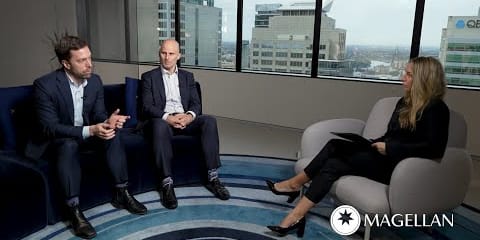
Hello and welcome to the Investment Markets podcast, where we aim to discuss investment matters that impact self-directed investors. I'm your host Darren Connolly, CEO at Investment Markets, and today I'm delighted to be joined by Ray David, Senior Equities Analyst at Airlie Funds Management. Today we're going to discuss the Australian equities market but before I get into it I need to remind you that this is general advice and general information only and nothing in this podcast should be construed as an investment recommendation. You will need to decide what is right for you. Welcome Ray.
Pleasure to be here Darren.
It is a pleasure to have you. Now, we want to talk about Australian equities markets. It's been a bumpy few months. There's war going on overseas. We've had inflation. We've had interest rates increasing. We've had a budget that maybe hasn't been very well received. So maybe just to set the scene for the investors, can you give us an overview of the market over the last couple of months?
Sure. You're right. It's been a volatile macro, but if we sort of zoom out and look at the returns, the ASX200 is flat year to date. It has underperformed the US market so that the NASDAQ is up 15% year to date. S&P is up eight. And the other thing we're noticing is bond yields are grinding up. So we've got the Australian 10 year that's almost hitting 5% as we speak. The US 10 year is about four and a half percent. And what's really driving markets today, there's three thematics. So number one, the biggest thematic is the AI capital investment cycle. a big driver of the US markets, especially compared to the Australian markets. The second factor is structurally high or sticky inflation, which is driving those bond yields up. And the third factor is geopolitical risk and energy security. They're big themes that's driving a lot of volatility in the market. And looking at the ASX 200, you see a divergence of sector performance. So the energy and materials are the best performing sector. You've had energy up 25%, materials up 15%. Anything that's related to the Australian consumer or household has lagged the market. And so big divergence in performance and Australia doesn't give you that huge exposure to AI, the capital spend, but if the market was to start to doubt some of the big capital programs of the AI narrative, you know, that could be a good thing for the Australian market, which could lead to a rebound in performance, especially compared to those US markets.
And we were probably going to see that play out one way or another with an impending SpaceX IPO.
That's right. It's, it's a big year for mega IPOs. Um, I mean, the numbers are mind boggling. We've never seen IPOs of this size, but you've got SpaceX, which is happening at around $2 trillion valuation. Anthropic and OpenAI are slated to be a trillion dollars each. So, big year for IPOs.
And we won't delve into those IPOs in this chat but suffice to say they are very large valuations that seem to be a little bit, there seems to be a gap between valuations and the underlying earnings of those companies.
That's right.
And as an active investor I'm sure that's sort of something that you consider when you're looking at the companies in your portfolio. But I wanted to sort of maybe make a little segue into the passive versus active debate. Now we saw CBA rise to highs that probably seemed unlikely even though it's come back off a little bit. Where do you think that the passive, the rise of passive investing has a natural end point or a stopping off point? And as the market becomes more saturated with that type of investment, do you think it actually creates opportunity for active investors?
Yep. Great questions. Questions we ask ourselves every day, particularly as active managers. If we look at Australia, it's about 25% of total ownership sits between passive funds. And passive is just a market ETF that's typically run by Vanguard or VanEck. But in the US, it's sitting close to 50%. And so if the US is an example for us to look at, potentially suggest, there's still more runway for the Australian market. And so I would suggest that trend towards passive ownership probably continues and the main reasons being is that the passive funds have done a great job of bringing accessibility to investors. And so, you know, if you're an online investor or a retail investor, you can just go out and buy any market you want, click on a button through an online brokerage, and you can do that for a pretty low cost.
It's the democratization of investing to a certain extent.
That's right, but, um, active management is catching up. And so, uh, Airlie funds, for example, has a active ETF that is also available to be purchased through your online broker. And so other managers are also starting to now offer these products and it's simplifying accessibility to manage funds. and also pricing is coming down. So there's still a gap between active and passive, but that accessibility piece is being solved through active ETFs being made available. And if you think about going back to your question around passive and what impact it's having for active managers, It's certainly leading to more concentrated indices around the world. And if we look at Australia in particular, so today where we stand, there are five stocks which make up almost 40% of the index. So BHP, CBA, ANZ, Westpac... And in the US, technology is by far the biggest driver. It's about 25% of the index, NVIDIA is the biggest, the biggest stock in the market.
So you put in your bets on one or two concentrated sectors in each market, albeit they are, they are different sectors.
A hundred percent. And so when you're buying a passive index, by definition, these funds just buy the biggest stock with little to no regard for valuation and That works fine when markets are rising, you know, people aren't, you know, so risk averse. But then when, when you do get a inflection point in markets or a certain sector becomes too big and the earnings don't justify the valuation, you can see. pretty healthy corrections. And that's when active management really shines because if you're an active manager, such as Airlie, you know, we're looking at company valuations. We're not buying stocks based on their size. You know, we're, we're doing the work to make sure that there's enough margin of safety in the companies we own.
So momentum isn't enough.
Exactly.
Or isn't anything nearly.
Exactly. And then going back to your early comments around these mega IPOs. we're talking $4 trillion of potential new market value coming into the public markets. And so they will be featured in these passive indices over time at some point. And more money is buying these things with no regard for valuation. But if the active investors look at these companies and start to think the valuations aren't sustainable, or there's a negative earnings revision and the momentum goes the other way, it could lead to concentrated risk in these passive funds, which people buying these funds may not be aware of.
And maybe we saw a little bit of an example of that with CBA, as I think most market commentators were scratching their heads over the actual value of that business, so that stock. Even though it might be a well-run business, the valuation seemed pretty stretched at the time.
Correct. And it's that old saying up by the elevator, down by the lift. So when you've got this constant flow of passive money coming to these bigger stocks, that grind upwards continues on for longer than what an active manager may assume is rational. But then when there's a change in sort of a trading update or earnings outlook, We are seeing huge, huge amounts of volatility around these trading periods, because when the passive money stops and a quantitative or active manager tries to get out, the liquidity just isn't there. And so you, you are seeing much more volatility as a result of this passive structural change in ownership, particularly around trading updates or events by companies. And that could just mean that, you know, retail investors may be looking at a company share price one day, and then you're seeing a big drop in the next day because of that lower liquidity. And CBA was a good example where after its trading update earlier this year, the stock fell by about 12% in two days, which is a big move for a company of that size.
And, you know, when we look at the passive investing and we look at active investing and you've sort of started to outline the case for active investing, And Airlie is obviously an active manager concentrated portfolio. Can you give us maybe just tease a little bit more around the philosophy behind… How you pick those stocks and what, what does quality really look like in your mind?
Yep. It's a great question. And it's something we've spent a lot of time building on this philosophy. So the Airlie Australian Share Fund, it's going to trade a portfolio of about 35 stocks. And at around 35 stocks, you know, it gives you enough diversification to reduce risk, but many studies have shown after 30 that diversification risk reduces. So 35 stocks give you that diversification, but also gives you that concentration power for your best ideas. And then when we're putting together a portfolio of companies. We're really looking at four factors that we look for in a company. So number one is we want balance sheet quality. Number two is business quality. Number three is management quality. And number four is valuation. And so I'll talk to each of the four factors is why we think they're quite important. So the first one balance sheet quality. So what, what we found that, and the data backs this up through our own backtesting is companies with strong balance sheets do tend to outperform over the long run. And that makes intuitive sense because if you've got a strong balance sheet, you can reinvest for future earnings growth. Whereas if you're levered, you know, you're trying to cut costs to pay down debt, you're foregoing that future investment for future earnings.
And companies don't usually shrink themselves to greatness.
Exactly right. And so that the balance sheet gives you that optionality. And second of all, if you're a strong balance sheet, you can deploy it and acquire earnings. And hopefully you acquire well. But also it's a hidden source of earnings growth. But the biggest factor for us as to why we want strong balance sheet is risk management. Particularly when things go bad, company doesn't expect it, investors don't expect it. And if you've got a levered balance sheet and your earnings are lower, your margin of error is much smaller. Margin for error is very tight. Stock price is probably going to get hammered. And then the board or management may be panicked into raising additional equity because the banks are breathing down the neck. They're typically going to do it the wrong part of the cycle, destroying shareholder value. And so we don't want to ever be caught up in a dilutive equity raise because the balance sheet was low. So that's why we want strong balance sheets. And then business quality, we spent a lot of time on.
So what, what does business quality mean to you?
Yep. So in terms of business quality, we want to own companies that have something special or unique about them. It could be pricing power. It could be scale advantages. It could be privileged assets. There could be cyclicals. There could be low growth companies. But we want some of these attributes which are typically manifesting in better return on capital than the peers. Because if you've got the best position on the cost curve, you should be generating better return or better margin. If you've got pricing power, should be able to price at a premium to peers without impacting demand. And if all that holds true, by definition, your return on capital should be better than the average peer in your industry. So you can be a cyclical high quality company. You could be a resilient defensive company that's high quality. We just want to own the best within the industry. And by definition, if you hire return on capital for every dollar of capital that you're investing in your business, that should be a tailwind to earnings relative to your peer set. And so an easy screen would be to do is look at return on capital through time, through the cycle, look at margins, but then also look at those growth rates relative to the industry. And there's plenty of high quality businesses out there across all industries. And what is unique about Airlie is that we're not just buying high quality growth companies, we're buying cyclicals and we might be buying high quality turnaround company that's fallen on its knees for a transitory issue. But as long as it's got a better return relative to the peer set, we know we're quite interested. So that's, that's the second factor. The third factor, and this is a dynamic factor and one that's really hard to dimension on a spreadsheet is management quality. You know, you can meet a manager and they can be the best salesman and they can really sort of get you excited. Then you end up finding this manager's track record is not. what they're promising to be. And so the way we look at management quality is, number one, we spend time with management, but we look at the history around capital allocation or track record. We look at their incentives. So we want to see incentives that are not just focused on EPS or shareholder growth. We want to see return incentives, but more importantly, we also want managers that are aligned, that have some skin in the game. And so we've just found that. Bad management can destroy a lot of value through bad M&A or poor company strategy. And again, difficult to dimension onto a spreadsheet only comes through experience and by discussing and talking with the management team. And then the last factor is valuation. And this is by far the most important factor to determine your future return growth in a company, because you can find a company that ticks all three boxes, but if you end up overpaying, You pay too much of a high price. It's on a high multiple and there's a change in the industry or the investor expectations around earnings growth proved to be too optimistic. It may end up being a very poor investment. And so for us to build that portfolio, the company has to get through those first three factors. And then the last one is we have to be patient. We've got to wait for these companies to look attractive on valuation to give us that margin of safety.
So when the market was over 9,000 points a little while ago, and everybody was saying it's It's very expensive. Did that prove problematic for you? Were you then seeing companies fail that fourth, fourth hurdle? They could be great companies, but actually the valuations just didn't justify an investment.
That's right. Look, there was, if we go back to sort of coming out of COVID, bond yields were really low. You did see a huge amount of PE expansion across a number of sectors. And then If you towards the middle of 2025, we saw the peak of the most expensive companies by multiple relative to the lowest company. So the gap between PE multiples divergence was quite high. And so there was a lot of companies that we would have loved to own. We just couldn't stack up on valuation. And so you had to be disciplined. And if you weren't disciplined, and some of those companies today are on sale, but you're sitting on some big losses, had you not been disciplined around the price you paid.
Is there pressure then to deploy capital? Like how do you sort of manage that pressure and say, no.
Yep. We typically are 100% invested. So we're not trying to time the markets through cash positions because our mandate requires us to be invested. But what we're typically doing in the portfolio is high grading quality against valuation. And so, you know, what we found ourselves, uh, last year was buying like resource companies, which were out of favor and a company like, you know, BlueScope, for example, was one where it's a cyclical company, but with really privileged assets. And, you know, that we're trading a low multiple, especially relative to the tech sector. And so we're just, and today it's reversed. But we're constantly trying to look for the best ideas at the time at the best valuations. And so we're optimizing for that risk return equation.
Yep, so the portfolio is effectively, you're trying to recycle the least attractive out and put the best ones that you're finding in. So there's a continual, well maybe not continual turnover, but there's a replacement.
process. The market moves so quickly today, especially with the change in market structure, where it's so important to be that discipline on valuation, because if some of those high flying stocks of last year, particularly like the tech names, like they're down a lot and the multiples that investors were paying for were eyewatering. So, you know, something like a Pro Medicus was in a revenue multiple more than a hundred times. And so there wasn't much scope for margin of error. And so we just, we avoid stocks where we just can't make the case for valuation.
Yep. So maybe let's just explore that a little bit. So if you were to put an investor hat on, and I'm looking to invest into Australia. So I've listed ASX 200. I'm starting with nothing. Where would you go? And maybe what would you watch out for?
The best opportunities today on the ASX is what we'd say is a cohort of quality companies that have been significantly de-rated by the market because of fears around what AI will do to their future cash flows. So as an example, I talked to you earlier about the process, how we're trying to find these companies. Best return on capital, industry leaders would be market share, dominant products or dominant assets. But these cohort of particular companies has a very light balance sheet, a very intangible heavy balance sheet, where it's not hard assets. It's a lot of it's network effect or brands. And so that group of companies has de-rated from a PE multiple of around 26 times mid last year to about 18 times. And there's two companies that stick out to us. Number one is CarGroup, which, you know, the company is down by 50% over 12 months.
It's multiple that's derated from about 40 times to 20. 20 is still a high, multiple in historic terms.
That's right. But compared to the Australian market trading on 17, Australian banks on average are trading higher. But so relatively, it's in relative, relative to the market and relative to its history, it's actually at a fundamentally attractive level. But so that's, that's a, that's an example that we've been adding to. And so for, For your investors, a car group is the global leader in online marketplaces for used cars. So they've got the market leader in Australia, which is carsales.com.au. They've got a leadership position in Brazil through a business called Web Motors, South Korea, Encar. And in North America, they've got this business called Trader Interactive, which is a mixture of recreational vehicles, power sports, and trucks. And so this is the business that historically has been on a very high multiple, has given investors mid-single digit organic growth, double digit earnings growth through organic and capital allocation through M&A. And this is a business that has fragmented customers where the customers being the dealers are very dependent on it for customer leads. And so the market has sold this company off aggressively. The multiple to start was probably too high. But today the market's concerned that this is a business model that will be disrupted and pricing power is going to be eroded. All these AI LLMs will eventually replace them. And so all the analysis that we've done, speaking to a lot of customers, suggests that's a far too pessimistic outlook for the company. I mean, when we talk to dealers that don't have time to develop their own systems, they don't have the scale to do it. And when we talk to Cargroup, they are embedding AI into their business processes and offering that to their dealers within the existing packages. So we think that's a fundamental mispricing in the market, which sits in that quality cohort. And another name that fits in that bucket is a company called Aristocrat, which most of your viewers would know as a sort of leading gaming machines and titles manufacturer. I mean, some of the biggest hits would be, is going back 15 years ago, is Queen of the Nile. And so Aristocrat is a global leader, has about 43% market share, leadership positions in North America, but it's a gaming software developer at its heart. And when the market looks at that sort of business, they're like, okay, this is going to get disrupted. AI can code a new game. I can watch a game, go to market. That's not true because to actually launch a market, sorry, to launch a game, it requires a track record. You know, a casino is not going to take them on any new machine that hasn't got all the operators have a track record, but with 43% market share, that gives you scale to invest in R and D. You just scale to invest in sales. And the biggest barrier is, I don't know. For a gaming machine to be used in a particular casino has to be approved at a jurisdictional level, so state level, and that requires time and money. And this is a business that's given you mid-single digit organic growth for a broader part of a decade. It's got no debt, but it's fallen by about 35% on these fears of AI. It's not a single narrative, but there's a cluster of companies in the market that we see as great opportunities because the market's like the AI losers. And it's one of the best risk return outlooks from, for our perspective that we see for these businesses. And then there's the other, on the other hand, you've got what we say is expensive defensives on the ASX. They've been just bid up to extremely high levels.

So these are the ones that the investors should probably be a little bit more cautious on?
Well, the investors have been crowding into these names because they're so worried about the AI disruption for the rest of the part of the market. And so something like a Wesfarmers, it's great business. Telstra, they're on pretty high multiples relative to their history, relative to the market and relative to sort of global peers. But these businesses are seen to be AI definable. It's very hard to disrupt a leading big box hardware retailer. You know, you can code a website, but you know, you still got to source the product from China or Australia and offer it to consumers. And with Telstra, they've got hard infrastructure being the copper networks or the cable networks as well as the customers. So they've seen a big shift out of these intangible asset backed companies that have got a strong track record and history into these good companies, but a large defensive. But the multiples are very high for these companies. And so we're just cautious around this is avoiding these AI losers and cramming into these kind of defenses because we think The payoff factor from owning these companies at this level is very different.
And there's always a difference between the price that you pay and the value that you get. When we consider some of the thematics that are rolling through the Australian market at this particular point in time, this is maybe a two-part question. Which of the thematics are really sort of front and center for you and the fund? Which, which ones do you think have longevity? Ones you want to hit your co-tail to, so to speak, and which maybe are sort of more, sort of, are going to come and go within maybe 12 months?
Yeah, look, the, the three thematics we talked about earlier, the AI capital spend, um, pretty unlikely that's going to disappear anytime soon. Like this is a real industrial revolution, but the quantum of the spend could change because today, you know...
Well on a fundamental basis, are the earnings there to generate the return required?
That's right at the moment. It's that they're loss making. And so the capital they're putting to the ground today is in hope of future returns. And my personal view is that the quantum of spend will not be sustainable. Cause number one, the models are commoditizing. There's four main models out there. It's becoming increasingly obvious is the quality of the models depends on the data. And so like Gemini, for example, is not charging you. And so Claude OpenAI, are starting to charge you to recoup that investment return. So the quantum may not be durable of spend and the industry structure around how many models are out there. It may consolidate over time, but there may be. Well, from what we could see is the spend's going to be there. We just can't articulate the quantum. I don't think anyone can until there's a return on capital. So that's probably one thematic. The second biggest thematic is energy security and increasing onshoring of energy security. And the cost to build these assets has just increased significantly. And so most of the assets in the ground today, whether it be energy processing plants, whether it be ammonia nitrate plants, fertilizer plants, energy generation using electricity generation, the cost to build any of these assets today.
It's not getting cheaper.
It's not getting cheaper. And so. We think that thematic continues and this inflationary backdrop we're in will be self-fulfilling because if, you know, if you want more supply of energy, you know, the cost to build it has gone up and so people are going to want higher price. So that, that thematic isn't going away we think. And then, you know, the, I guess the, the biggest thematic that we're positioning for in, in the portfolio, it's not much of a thematic, it's more of a market pricing dynamic is, We're seeing today some of the highest quality companies in the market on sale. And part of that is because there's a lot of fear around this AI thematic and how disruptive it will be to businesses. And so it's throwing us a lot of opportunity. And the other thematic that we're sort of betting against is the dominance of Australian banks. So they're kind of two thematics we're positioned for, which I'd go to more detail if you like, but we think there's some big inflection points in the market at the moment around those thematics.
Yep. I'm coming back to the, I'm interested in one of the comments made around the management teams. When you're looking at the different teams for companies that maybe are on the radar, what type of red flags sort of might pop themselves up and you say they're, maybe they've ticked a lot of the other boxes, but actually this particular issue, whatever it might be, is taking them off the table for us.
Yeah, good question. The red flags we look for in management teams are typically governance related. And so if we see evidence that there are inter-party related transactions, that's a no for us. We spent a lot of time on accounting quality and, you know, if there's a, a management team that may be loose around sort of governance principles, you might see that in accounting quality, particularly if they're trying to sort of push towards their earnings target. So we spent a lot of time looking at accounting quality. But the big factor comes down to what's the strategy of the company, the management team, what's the track record and are they achieving their targets? Are they doing what they said that they would do? And in particular, we scrutinize M&A extensively because it's very easy to sell, to be sold an M&A deal by a banker, you know, earnings synergies, revenue synergies, but delivering on that is a lot harder to do. And if you do bad M&A, that's permanent value destruction. So they're the kind of red flags we look for. And I guess the green flags in management teams are just consistency of strategy, the track record. Uh, and typically delivering the best outcomes within your own industry, as opposed to trying to pivot into something new that there's no experience within the company.
Yep. Um, and of course management teams change reasonably frequently. Um, sometimes it's, uh, plans change and sometimes something's happened in the background and there's a, there's a trigger. So what's your process for when that happens? Do you go out and then look to go and meet the new management team? What do you do? What must happen reasonably frequently across the portfolio?
It does. So number one, have to get out and meet them. Understand their motives, their strategy. Typically we'll also engage with the board. Number two is we'll look at their incentives and whether there's been a change. Number three is we'll look at their track record at their previous employer. And most times you actually see a lot of internal succession, which gives you a comfort that this management team is not going to go out and do something quite different.
So there's continuity.
Continuity, that's right. Um, and then there's this sort of 12 month grace period where you're, you're just, you're keeping a watchful eye. Uh, we've actually, one of the, one of the flags that we've developed in our processes, we, we do look at, uh, CEOs and CFOs, uh, who've been in the role for less than 12 months with a bit more skepticism, because there's an incentive to reduce, you know, the earnings and so they can meet their targets.
All the bad news comes out straight away.
That's right. And so we're quite cautious around new management, unless the business is needing any refreshment and new strategy because the internal management team have just done a poor job that external investors such as ourselves are requiring a refresh. But typically management turnover, we do associate it with a greater level of disruption and risk, particularly around rebasing risk.
Yep. Any examples maybe of a company in your portfolio that's got that right, that has had I guess a two thumbs up or green flags for a smooth turnover of senior management whereby everything's continued or maybe sort of even sort of stepped up.
Yeah. We would point to BHP as having one of the best corporate governance frameworks as well as management succession frameworks. And really shown to us when they basically walked away from the anglo merger. So BHP, we would say would have the best capital allocation framework in the market. They came out a few years back on a capital markets day. It was a 30 page plus presentation on their capital allocation framework. And what they talked about was all the lessons of poor capital allocation in the industry and what lessons they took from that to apply going forward. And they talked about where they want to take the business, what their return hurdles are, and those return hurdles. were not to be jeopardized when looking at deals. And so initially you think mining company, they've got most mining companies have a terrible track record of capital allocation. They're buying companies at the top of the cycle, raising money at the bottom, but BHP came out and said, we're not like that. And so the Anglo merger came about. So the first thing investors like ourselves are trying to think, okay, well, what's the risk here?
They're going to overpay. They want this copper. Here we go again. And the stock fell. when they made that announcement.
And there was a number of bids put forward to Anglo and Anglo has some fantastic copper assets, but they walked away and they walked away because part of the capital allocation framework was juggling brownfield, greenfield returns against acquiring. And with copper mines, you can go out and build a copper mine anywhere between 20,000 and $40,000 a ton in terms of capital intensity per annual production. And when they compared buying listing listed mines, like at Anglo or at the price, it didn't make sense. So for shareholders, it does mean you have to be more patient. You have to develop these mines organically, but it is, it was at the time the best return on investment decision to make. And so for us, that's a tick, whereas there's other boards that we've spoken to in the past. And what we'd say is that some board members are not as strong on the capital allocation education as we want them to be. And so we would say some of those boards are a risk factor.
Yep. So more opportunistic in terms of just wanting to do the deal.
That's right. And just basic principles around return targets, costs of capital, difficult to enunciate to us. Whereas BHP was pretty clear on those parameters.
And have stuck to the knitting over, obviously they've had a CEO succession, so they stick to the knitting irrespective.
That's right.
It's consistent.
Exactly.
Is there an example maybe of somebody, maybe you don't hold them anymore, so you can talk freely where a company hasn't got it right? And maybe just sort of what learnings you took out of that.
Yeah. Um, but the one that probably sticks out, uh, is, is CSL and it's, CSL is probably a good example to talk to because it just has been a fall from grace. And this was a company that got to 6% of the index.
It was a darling of most self directed investors for a long period of time.
That's right. And CSL is still a great company. It's one of the best plasma fractionation franchises in the world. But the problems for CSL really started in 2022 when they went out and bought Vifor. So they paid $18 billion for Vifor. It's one of the biggest acquisitions in Australian corporate history. And they got it completely wrong because they paid a price that was far too high. They won investors for what it was worth. I mean, they paid a pretty decent premium from the listing price. There was no real strategic synergies or benefits with the acquisition. So it was a horizontal pivot. That doesn't really make sense from the existing business. And post that deal, there's been a lot of management instability. So shortly after consummating the biggest deal in the company's history, management stepped down, there's a new management team put in and it became pretty clear early on that the acquisition wasn't delivering on stated targets. And so the management team then went out on a pretty radical cost restructure program. We're talking billions of dollars of cost out, integration, trying to integrate a plasma business with Vifor, massively disruptive, loss of talent. And so that led to number one, a big fall in returns because of the goodwill on the balance sheet. gearing also increased, the core business got disrupted from all the restructuring and that gave competitors enough oxygen to come out with as good as products as some of CSL's rare and exclusive products in its fractionation business to compete head on. And so it took its eye off the ball to some extent and the current management team have come to the market and sort of admitted to some of these areas, but today you found The core business under a lot of pressure from competition, because during that period of distraction competitors were able to catch up. These competitors are discounting pretty heavily on price to take market share. And at the same time, you're still left with a pretty bloated balance sheet around with goodwill in terms of from Vifor. And so you've seen significant amounts of earnings pressure. Um.
The margin of error has, has pretty much disappeared.
Disappeared. The stock's performance now reflects a lot of that, but it's, it's, it's fallen by over sort of 60, 70% from the time of the acquisition. And that's, that's, that's an example where a great company can go wrong. And the lesson there for us is that, is M&A transformational deals can be disruptive. The fallout can take years to work through and some of that lost profit to competitors probably won't come back to CSL.
I think many of the studies, I think you've got to find the studies that show that generally M&A's are positive for balance sheets and companies they tend not to be.
There's very few we've seen that have worked and the ones that have, have been typically companies deploying them when there's market dislocation or depressed valuations. And one of the companies we own in the portfolio that we'd call out that's got a fantastic track record of doing this is Seven Group Holdings. You know, it's, it's, um, run by the Stokes family, Ryan Stokes. And you know, he's got a three out of three hit rate on acquiring well. And the, the secret of the formula is just, you're, you're a big shareholder up. You're patient, you buy when prices are low and you buy good assets. What we try to do at Airlie with that portfolio, he's done it on a scale...
On a corporate scale.
That's right.
I would just like to say if you liked what you saw what you heard today please subscribe, share, follow, or leave a comment on the channel of your choice and for more insights like this and to search find and compare hundreds of investment products like Airlie please go to investmentmarkets.com.au


An ASX-quoted Active ETF providing exposure to a diversified portfolio of typically over 300 global listed companies through an active systematic investment approach.
The Fund’s primary investment objective is to provide long-term capital growth and regular income through investment in Australian equities.
The Fund provides an opportunity to access a highly experienced investment team with a proven track record of prudent, common sense investing.
The Fund objective is to achieve attractive risk adjusted returns over the medium to long-term while reducing the risk of permanent capital loss.
An ASX-listed Active ETF investing in 20 to 40 of the world’s best global stocks