


The Rixon Income Fund is an asset-backed lender with a Target Return of 10-12% p.a. with distributions paid monthly in cash.
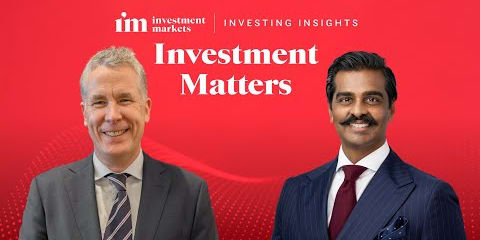
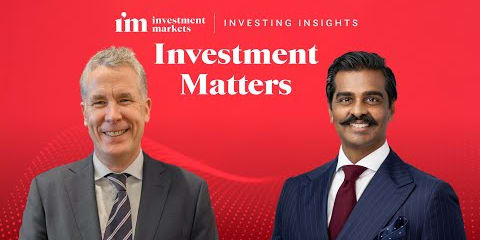
Patrick William, Co-Founder and Managing Director of Rixon Capital, discusses the rapid growth and strong risk reward profile of Australia’s private credit market. He explains how bank retrenchment has created a lucrative niche for specialist lenders, enabling them to provide investors with equity-like returns and asset backed protection.
Patrick highlights why he believes private credit will remain attractive in 2026 and the key issues for investors including fee transparency, manager alignment, fund mandates, and risk management.
Hello and welcome to the Investment Matters podcast. I'm your host, Darren Connolly, CEO at InvestmentMarkets, and with me today is Patrick William, co-founder and managing director at Rixon Capital. Today we're going to discuss investment matters relating to private credit. However, before we get into it, I need to remind you that this is general advice and general information only, and nothing in this podcast should be construed as an investment recommendation. you will need to decide what is right for you. Patrick, thanks for joining today. We've got a lot to get through. But before we get started, can you give the audience a little bit of a potted history into your background? And in particular, we're really keen to understand the opportunity that led to the founding of Rixon Capital.
Can do. So I started my career in mergers and acquisitions with Macquarie Capital, the tech media and telco group out of Sydney and Singapore. Then moved to a boutique M&A house in Sydney for about 10 years. Towards the tail end of my time there, we established one of the first private credit funds in the country, and I transitioned careers into funds management. Funds management is far more gentlemanly than M&A, so I decided I'll stick with it. I then left them to join another fund where I ran a high yield strategy for them on behalf of primarily North American investors. And what I observed while I was there was there was this niche in the market where You could deliver really high returns, but with very attractive credit metrics, so completely asset backed, first ranking. But the check sizes were sub $20 million, which is considered way too small for the institutional lenders. So we decided to set up a fund manager to target that specific niche and have a very manageable entry point of $50,000 for Australian wholesale investors. And the goal was it'd be a great product for retirees looking for income and some form of downside protection.
So demographic tailwinds are available. And how long ago was that? And what's happened with the business since it was founded? How's it grown?
We launched the investment manager in July 2022, deployed our first funds and effectively started the fund in November 2022. at $3 million funds under management. As of today, we've got $170 million funds under management split between two funds, the income fund, which is about 168 and the credit opportunities fund, which is brand new at just under two. So it's been quite the journey.
From 3 million.
From 3 million. It's nice to be able to pay rent and bills without dipping my own pocket. But you know, we've got a cracking team and the markets have been very kind to us.
And I guess that growth is testament to what you've been able to deliver for your investors.
It's good evidence for the proposition that source has set up the fund, which is this cracking return with this degree of capital preservation. I just thought to ourselves when we launched surely this is what people want. You know, the first 12 months were hard.
They always are.
Yeah. And as as we got traction, as people saw those monthly returns through word of mouth, predominantly the first, say, two years, the fund grew substantially.
That's an excellent result.
Thank you.
Private credit now has become much more mainstream, maybe if I can say that, compared to maybe in 2022. Certainly consumed a lot of column inches last year in particular. Nearly was the enfant terrible of asset classes to a certain extent. But as we enter 2026, can you give us a little bit of an overview of how you look at the market?
If I talk about the market and the opportunities and the attractions, still very, very attractive because broadly speaking, it's still a relatively nascent market. And the beauty of a nascent financial market is with the right fund manager, you can generate a risk reward that is above normal. And that won't last forever. You'll get that for three, five, 10 years, perhaps, and then it will normalize once it's competitive. So 2026 is a great year because we're still nascent, so those returns are still there. But because of the blow-ups of last year, because of ASIC's interest in the sector, it's forcing most players to institutionalize how they govern themselves. Third-party trustee, better disclosures, more cautious underwriting. So investors are getting both benefits. It's a good market. And now people are under pressure to actually run their funds very, very tight and very, very carefully.
Which can only be of benefit to investors.
Absolutely.
And the market I think is fair to say is when you look at overseas markets, Australia hasn't grown, private credit hasn't grown proportionally in the same way that it might be in the US or the UK for example. So you believe there are a number of years ahead of us before we catch up to become the same size as other markets.
Definitely. So if you look at, this is a rough guide, but in the US, 90% of business lending is run by the private credit market.
90%. I don't think anybody knows that stat.
So the banks focus on large institutional lending or home loans. You know, that's really what they do very, very well. In Australia, it's almost the inverse. So we've got a long, long way to run.
The banks are quite keen in home loans too in Australia, so that may be an issue. But 90% in the US is quite a large, that's quite an in-depth benchmark.
Of the business lending, yeah.
Of the business lending.
Whereas in Australia, 90% is run by the banks, 10% in private credit. So that's got to swap.
So how do you see that trend playing out? What are the drivers? So lots of capital. What's driving that and how is it likely to manifest itself over the next couple of years?
So I was going to say slowly, slowly, but this sector is about seven, eight years old at this point.
And it's growing fast.
And it's growing very fast. So it started with the banks withdrawing from the small end of the market. So property development, corporate, or SME, anything below $15 million, maybe seven, eight years ago. And as time goes on, that minimum check the banks will get out of bid for is rising and rising and rising. So today there are private credit deals, you know, real solid businesses that will go to private credit at higher pricing at $75 to $100 million because the banks can't underwrite the complexity or the banks don't have the appetite for something that's a bit more esoteric.
a lot of the sort of media and column inches tends to be about non-bank lending to the property sector. Now that's, I wouldn't know the stat, but maybe you do, but that's only part of the market.
At this point, it's a lot of the markets. So, you know, 70, 80% of private credit in Australia at the moment is in the property sector. A key reason for that is, one, it's easy to underwrite. It's a valuation report. It's a piece of land. They're going to build it. A million dollars apartment, you do the math. And then on the investor side, Australians love property and Australians understand property. So that was the easiest space to set up fund up in. So I tell people, you're less likely to get a outsized risk reward proposition in property private credit simply because it's well-backed. It's competitive. There's some very smart players out there. So if you're a good developer, you will be able to get yourself a good term sheet.
And outside of the property aspect, so that other 30%, that's probably less well known to investors. It certainly maybe doesn't quite capture the interest of the newspapers and so on. Can you just give me a sense of what that looks like and maybe some of the different sub-segments within that 30%?
Yeah, so that isn't a massive sector relative to property, but there are a whole slew of players writing loans from a half million to $100 million. They'll do anything from deeply subordinated debt to debt that's first ranking. There are funds like us that are asset backed. There are funds that lend against high quality cash flow. So it's quite diverse. It's a good space for investors because it requires a complex skill set, which is why there aren't many of them. They tend to be run by ex-investment bankers or institutional bankers. And because it's a relatively small pool, there are about 15, 20 funds in Australia that do that, and they do that very well.
And as an investor, when you're looking at the sector, do you think there's any maybe common misunderstandings that investors have about the non-bank lending? Any questions that you get asked day in, day out? People really trying to understand what they're investing in.
There are a few, the one that pops up once in a while when the bank because the banks pull out of SME landing on the basis that is all too high risk. We're going to get off our books do our investors a favor.
A home loan or a mortgage is much better.
Well, that's right. And what's happened is private credits emerged and they've shot the lights up at higher rates. So the bank CEOs are sitting going, we may have stuffed up and pulled the trigger too early and on two smaller check size. So occasionally you get the bank CEO bagging the industry, but in reality, we're not taking loans, private credit broadly in the corporate space it's not taking loans that are high risk. They're taking loans that are too small for the banks. Because when you go to a bank for a loan, there's institutional banking, corporate banking, and business banking. Anything less than $50 million goes to business banking. And they do very, very vanilla lending. So if you turn up, you can have this lending business, you could have this export business.
Anything not vanilla.
Anything not vanilla. And they look at you and go, do you have a house you can put up? And the founder goes, no, that's not how it works. But if they wanted half a billion dollars, they go straight to the 45th floor to institutional banking and they underwrite like that at 7%.
And probably get a very good deal.
Very, very good deal. And that's the market private credit has focused on and has done very well with because complexity doesn't mean high risk. It just means you need a skill set to understand the complexity and use documentation to capture your asset pool.
So one of the other labels that's often applied to the sector is it's defensive. Now how would you respond to that label? Do you think it's a true label or are there some nuances to that for somebody on the outside looking in?
So yes to both those points, you're right, it's true as a broad label for private credit, but I think it's abused sometimes for marketing purposes because there is nuance to it. So private credit as a whole across asset class, across the risk spectrum is defensive in the sense that it ranks ahead of equities. If anything happens, equity gets burned first and you have first, second or third right over the asset. So in that scenario, it is defensive. But I guess when investors say they're looking for a defensive asset, they're looking for something a bit more substantial than that. So again, if you look if you look deeper into the private credit space, if you're looking at funds that lend to infrastructure, essential infrastructure, businesses with contracted revenue, that's defensive. We're an asset backlender. That's defensive because the proposition is you stuff up, we sell the tractors, sell the factory, we get our money back. So, There is nuance to it, but as a broad asset class, relative to equity, yes, it is defensive.
And what would you say to investors who maybe are considering investing in that asset class, but maybe also looking at equities? Equity markets have had a good run recently, particularly abroad. They're probably on average considered expensive. Obviously, we're not straying into personal situations or circumstances. But how do you think of those two opportunities vis-a-vis each other?
Now I'm biased because I run a private credit fund, I'll confess to that. But let's take equity as an example for an Australian investor. The Aussie dollar has been low, it's down from its long-term averages. The US market has done very well, so that market's risen on the back of primarily earnings. But if you send money to the US unhedged and the Aussie dollar rises to its long-term average, you're exposed, you've actually got a loss. So not that compelling. Then you look at the domestic market, that's had a really strong run. So the long-term PE on the ASX 200 is 15 times. The current PE is 20. So the uplift in the ASX is multiple driven, not earnings driven. So odds are there's a correction coming unless earnings pick up, that those earnings don't pick up. There's a chance you'll see a 5-10% correction in the next 12 months.
So if only we could pick the timing.
If only we could pick the timing, that's right. So now you've got that context of risk. Then you look at return. The long term average return on the ASX 200 is just shy of 10%. So your equity, first to lose your money, highly volatile and it's overpriced. Long term returns 9-10. Then you see Australian private credit because it's nascent. You rank ahead of equity. You get paid interest quarterly or monthly. You've got asset backed strategies, strategies secured over high quality cash flows. You can get 10 to 12 percent. In that context, why on earth would you go into equities in the current market conditions?
So on a risk adjusted basis, it looks quite enticing as an asset class.
Yeah, so it's genuine equity-like returns, but with the risk and the protections you get from being a debt investor.
But opportunity, again, probably not likely to stay on the table indefinitely.
No, it is, you know, every generation has their opportunity. You know, if you were 35 years old with a really good job 20 years ago.
I would have bought property.
You would have bought property, exactly. You know, I've got friends in Brisbane who bought houses for $400,000. You know, where do you buy a house for $400,000 today?
Not in Brisbane.
Not in Brisbane, not in Brisbane. And this is the same with private credit, right? We'll probably have another run of three to five years. And what will happen is more money will come to the market, a few new funds will pick up and what you'll see is those returns compressed to more fair pricing. So instead of 10 to 12, you'd get seven to eight.
Are there any sort of things that keep you up at night thinking about So they might compress that timeframe. So there's a shock or something happens and actually the private credit asset class loses its luster a little bit. So when you're thinking from a risk point of view, what are the things that you worry about or that you consider?
Oh look, we've lived through it. So it's the scandals in the media. Last year was hard on a lot of credit funds. And I mean good funds, because if you're the general public, you read the AFR, you read a headline here and there and you go, look, this didn't sound too good. I've got someone who's lost a lot of money.
Every default sort of makes it to the back page.
That's right. And look, the newspapers need to sell newspapers. So they're tarred in a far more exciting way than it really is. So you end up tarring an entire industry. So we've had months where, you know, you've had to prod investors and go, look, are you topping up this month? Whereas what it should be is, you know, all the funds are doing the right thing. Investors deploy and the funds grow.
And the RBA has changed its stance recently. It's probably leaning towards a tightening cycle at this stage. Has that factored into your thinking at all?
It's factored into how we price. So we were doing floating rate with a floor when we found it three years ago. And then we reverted to fixed rate when rates were going up - sorry, when rates were going down, now we're reverting back to floating rate with a minimum floor, just in case they wanted two more rate rises. So that's one aspect. The other is economic risk. There's a reason the rates are going up. So we're looking at different sectors of the economy that could be impacted by it. But by and large, the RBA cash rate or the RBA cash rate setting cycle is focused on controlling inflation rather than economic conditions. because you can have high interest rates in a strong economy or what could be the case this year relatively high rates and stagflation. So our focus really is on making sure the pricing is right and it's above inflation or keeps up with inflation and we're only lending to businesses that will survive the cycle.
And have you seen competitive pressure increasing on the pricing? Or do you still have, so to speak, pricing power when you're engaging with these entities to lend to them?
Look, because we operate in a very specific niche, we have no competition. So we haven't seen pricing pressure. And our response to borrowers who say, look, I've got another term sheet, tends to be, well, go with that one then. Because we negotiate on a bilateral basis, otherwise we don't.
Okay so that's that's a pretty nice position to be in.
It's a great position to be in but my friends in the other funds will say I'd rather be me than you because you know we write loans on day one of two to five million dollars. they can get two to $5 million in interest from the loans they write. So it's a scale issue. But the way we see it is we've got a really good niche. We've got a cracking risk reward and our fund is, or our fund manager is employee-owned. So we don't need to report to someone at Challenger or AMP. It's a group of 7 to 8 guys who set up the business together and are building a business for the long-term.
With, I assume, appropriate skin in the game to make sure they share the pain with the investors and they share the upside at the same time.
I always tell people my greatest fear if anything happened was going home and telling my wife our retirement savings have gone down the gurgler. So I'm very much aligned.
That's a good way of focusing the mind and aligning your interests for sure. Now, maybe just, so we touched on sort of the interest rates in terms of maybe some other risks, maybe liquidity risk, borrowing risk, diversification risk. How do you manage those within specifically within within the funds that you've got operating at the moment?
Look, diversification is very important for any fund strategy. So we're very cognizant about building out the portfolio. So we've got just shy of 20 loans in the portfolio. That's good, but it's not great. Great would be 100. But because we're a niche fund, we probably never end up with 100. But the goal is to just keep diversifying that base. So that's just something you keep for of mind. With liquidity, now, that's a good question. So people say, oh, look, can I put my money in and out of the fund? And I go, no, because it's an illiquid asset. We're writing loans of one to three years.
You don't want an outflow just after you've written a big loan.
Well, that's right. That's right. So look, we offer liquidity on a quarterly basis, so you can get your money out several times a year, but you're compensated for the illiquidity with an illiquidity premium. So, you know, if you buy a listed private credit income fund, you're going to lose 4-5% of your return. That's fine if you want to move your money in and out, but if you're looking for a long-term investment and to maximize your return, then we make a lot of sense.
So you pay for the pleasure of being able to sell out if it is a liquid entity.
That's right.
What other things should investors think about before they step into this market? So on the InvestmentMarkets platform, income and income funds, generally in Australia, income is at the forefront of investors' minds, particularly as they approach or are in retirement. If they are considering private credit, what questions should they be asking of their manager? If you go to winnow 10 down to 5 down to 2, whatever the number might be, what should you be looking for?
I think the first thing you should do is actually understand what the private credit fund does. And if your answer is it lends and it generates X percent, you don't understand what it does. So every fund has its own mandate, you know, cash flow lending, subordinated lending, property development, asset back. So there's a plethora of risk.
It's not one size fits all.
It's not one size fits all. So first and foremost, you want to understand what the fund is and how it makes its money. And if that's opaque, you should be worried. It should be clear. So then you first you take comfort in, I like property development or I like that property development funder. I like this sort of fund. Take number one. Number two, you read the information memorandum and understand what the parameters of the fund are. You might say, look, I want to invest in a fund that is corporate lending. That's great. But what does the mandate say? Does the mandate say anything that smells like debt in the corporate space? Or does it say we only do subordinated debt or we only do senior ranking debt? Two different risk propositions. One is risk that will do this over the life of your investment. One, they'll have risk like this.
And priced accordingly.
And priced accordingly, I'd say you're better off with this one because if you want subordinated risk, invest in it and get the subordinated return with certainty and eyes wide open that that's the risk you've got. Third, and this is very topical, is what the fee structure is. You want to be absolutely certain how the manager is being paid. So the gold standard according to ASIC and according to a lot of good fund managers is clearly disclosed management fee, get a fee of X percent per annum on funds under management, and a clearly disclosed performance fee. All fair. The danger occurs when a fund manager can take upfront fees from the borrower on the side as well, because some investors might say, look, why not? It doesn't hurt me. And my messaging to investors is, think about, put yourself in the borrower's position. The board has approved taking a loan from Fund X. And the board has said, we will pay for 12 months, 15%. Do what you will with this. So the fund manager could say, all right, 15%, I'll take 4% as an upfront fee for myself.
Not bad.
Not bad. And that's cash upfront. And then the residual 11% are put into the fund. And I'll take 1% as a management fee, which is clearly disclosed, use the invest at 10. The problem then is it's your hard-earned money. with 15% risk getting a 10% return.
So there's a mismatch on the risk and return reward.
And the danger there is if you're unscrupulous fund manager, you can go, I can do lots of these and pick up 4% upfront. So at the end of two or three years, I can have a big book and if it blows up, you know, I send you an email saying you're sorry, but I've got my assets sitting in the wife's name and I'm ready to retire.
That's definitely something to think about. That risk reward paradigm is absolutely essential to understanding that it's aligned.
And just that alignment with a manager. What you want is a manager to be as worried or more worried than you are when there's a problem blown.
Yeah. What if the manager has to go home and explain it to their wife?
Yeah. Or lose the business they've made, right? So, you know, we obviously don't take upfront, which is why I'm telling you this. So for us to build a, and with a lot of funds, to build a substantial meaningful business.
Takes time.
It takes time. I need you to be happy. I need you to tell your friends and I need other people to come and give us money. So I'm aligned to make sure everyone needs to stay happy for the long term.
You mentioned at the start that you've recently launched a second fund. So can you maybe just sort of highlight the strategies of both funds and use that to just maybe just tease out the differences between the two?
So if you look at a risk reward chart, the Rixon Income Fund is the bottom left hand side. So first ranking, completely tangible asset backed cash paid. We consider this some of the best risk you can get. But because we target that sub 20 million dollar niche, you can generate a high return. So that's the income fund. But what we've observed in the last three years is very high quality borrowers coming to us. And we look at them and go, this is a cracking business. But they say, I don't have tangible assets, right? I'm a software business with great contracts. I'm an engineering business with a 30 year track record. And we look at them and say, look, that's a breach of our mandate. We can't give you money.
But they could be good businesses.
But they are good businesses. And they're not asking for a lot. And they're asking for two to three million, which, again, is too small for the big funds, not appealing to the banks. so we set up the opportunities fund to target that specific market so it's going to focus on first ranking as well but secured against high quality cash flows rather than tangible assets but in return there's a higher return hurdle for investors.
Okay so it's found its own niche so to speak but takes a lot of the learnings and parameters from the income fund just applying that into a different segment of the market.
Yeah, just moving a little right and a little higher up. But again, because it's underbanked, and because there's so much upside for the equity holders, there's actually a substantially higher return you can generate for investors.
Maybe just a final question, Patrick, just sort of if we're looking forward a little bit, maybe towards the end of 2026, and I know nobody's got a crystal ball. Nobody knows what's going to come out of the US on a day to day basis, let alone Let alone at the end of the year. Where do you think the market could be in 12 months time? You know, is it going to just continue to tick up? Are you worried about particular things? Is there going to be some dislocation?
I think the broader private credit market will just keep ticking along. You know, it's a small industry and you speak to, so I know the corporate and SME niche better. You speak to our peer funds. Everyone's busy. Now, second week of Jan, they're back. Lots of deals, lots of opportunity in whatever segment you're playing in. So I'm optimistic for the broader sector. Areas of concern are property development has been wobbling for the last 24, 36 months. So the good players do well, but what I'm worried about is the players who aren't as good or back projects that aren't stacking up. That's a risk if something large falls over.
It will be in the papers if it does.
Oh, it'll be in the papers for sure. And the other area of risk is anyone who's lent into the NDIS. You know, we've had people who run businesses in that space approach us for money. And from our diligence, we've drawn the conclusion there's two extreme outcomes. Outcome number one is the federal police raid the borrower and we lose our money. The best case scenario is the government cracks down and tightens the margins, which are excessive. and you end up being over leveraged against a high quality borrower. Either way, it doesn't work for us, but they've all accessed debt from someone somewhere. And as that unwinds over the next 12 to 24 months, I think you'll see that impact lenders.
That also might end up in the papers, I think.
Yes.
So to summarise, it's stay out of the papers, stick to the knitting and just do the basics well. Is that a fair summation?
Yes, because it's not a complex asset class. You look at a business, you put the documentation together that secures your position, and you make sure they pay you a check every month. That's really what credit is. The work is ensuring you're an appropriate risk to lend to, and we've got the documentation to make sure we can get our money back if you stuff up. It's really simple as that.
And there's an appropriate return for the risk that you're undertaking.
That's right. It's not rocket science. It's detailed analysis and administration, really.
Well, that's an awesome insight and thanks for taking us through the private credit market today, Patrick. I think the audience will find that quite illuminating.
Thanks, Darren.
Thank you. Thank you also to everyone for listening. For more insights like this and to search, find, and compare hundreds of investment products all into one place for free including the Rixon Credit Opportunities Fund and the Rixon Income Fund, go to investmentmarkets.com.au
The Rixon Income Fund is an asset-backed lender with a Target Return of 10-12% p.a. with distributions paid monthly in cash.
The Fund is an opportunistic high-yield, non-property private credit strategy focused on delivering a Target Return of 10% + RBA Cash Rate