Apple's high-yield savings account racked up almost $1 billion in deposits within four days of its launch in April. The 4.15 per cent annual yield with no minimum balance requirement is undoubtedly a draw for its more than 2 billion users, but what is truly noteworthy is the overwhelming response at a time of growing distrust in the banking sector.
As consumers, we tend to stick with the brands we trust. The same holds true when we are buying products, but it is even more true in finance and banking.
The widespread interest in Apple's financial offerings extends beyond its innovative technology and tie-up with Wall Street giant Goldman Sachs. It underscores the power of the Apple brand and its ability to build trust and loyalty with customers.
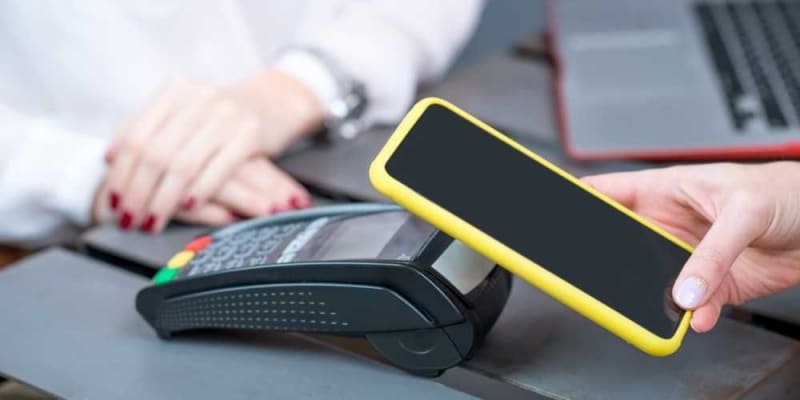
In terms of financial services, this isn't Apple's first move. It is already well entrenched in the Fintech sector with Apple Pay, Apple Card, Tap to Pay and recently launched a buy-now, pay-later service called Apple Pay Later.
Banking on the Apple's Advantage
The shift towards digital banking accelerated during the Covid-19 pandemic. This led to the rise of nimble, tech-driven neo-banks offering rapid customer service, low fees, high interest rates, and fast signup processes. But now, the rise of Apple's bank-like services could disrupt the neo-bank landscape; Apple can do everything Neo banks do at a much broader scale and at a fraction of the cost of customer acquisition.
Apple's focus on fintech is evident in its growing services share. It made US$94.84 billion in the quarter ended April 1, 2023, consisting of a record US$20.8 billion in services revenue, which includes payments.
The iPhone maker plans to offer even more financial products such as payment processing, financial risk assessment, loan transactions, fraud analysis, credit verification, risk management, and dispute resolution.
In fact, its huge cash reserves could be an asset in solving some of the issues plaguing the fintech, especially the BNPL sector in particular.
BNPL start-ups shot to fame during the pandemic when interest rates and inflation were low, but now they're struggling to stay afloat amid higher funding costs. But even before interest rates began to rise, these companies were scrambling for profitability. Now the situation has only worsened.
Sezzle, Zip, and Humm have sunk to multi-year lows, while Latitude Pay and Openpay have completely exited the BNPL segment. In contrast Apple Pay has grown to just over 3.2 million people in Australia, closing in fast on BNPL leader Afterpay, with around 3.3 million users.
A new report from Roy Morgan Digital Payments shows Apple Pay will soon surpass Afterpay, with 15.2 per cent of Australians using the service as of February 2023, a 4.1 per cent YoY rise.
In contrast, Afterpay’s usage has plateaued, with only 15.6 per cent of Australians using the service, representing a mere 1.5 per cent increase from last year.
Apple's dominance of digital wallets in Australia is also evident in the fact that Apple Pay represents 40 per cent of all tap-and-go payments, and 80 per cent of all digital wallet payments (as per Commonwealth Bank).
Its monopoly over tap and go payments on iPhones means it already earns millions in annual fees from Australian banks. Any move into savings and BNPL could see Apple having a bigger impact within the banking industry in terms of its ability to attract deposits, new account growth and credit and debit card transactions.
Disclaimer: This article is prepared by Ankita Rai. It is for educational purposes only. While all reasonable care has been taken by the author in the preparation of this information, the author and InvestmentMarkets (Aust) Pty. Ltd. as publisher take no responsibility for any actions taken based on information contained herein or for any errors or omissions within it. Interested parties should seek independent professional advice prior to acting on any information presented. Please note past performance is not a reliable indicator of future performance.

-4f9fi0s3k02gj10t535o.png)


-v8lxc7275hr89z0hzkrz.png)
-ulhzagvbsmdk2tc72zgj.png)
-weh3swd4zyleexypgsv3.png)